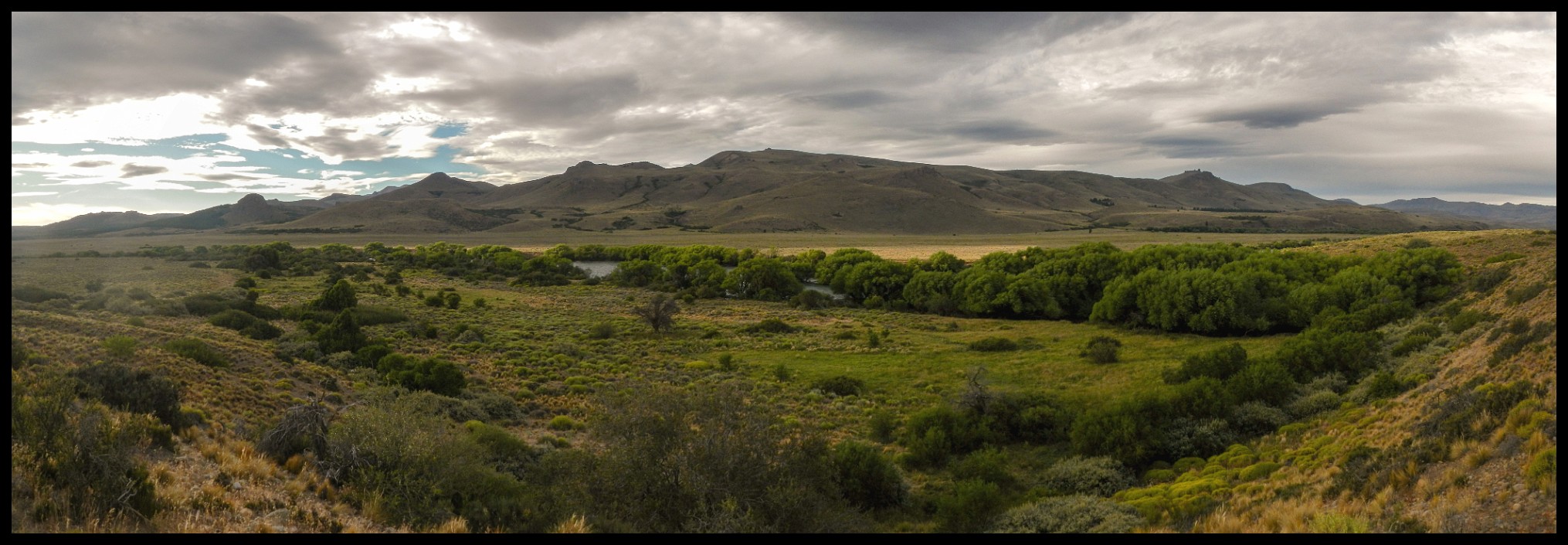
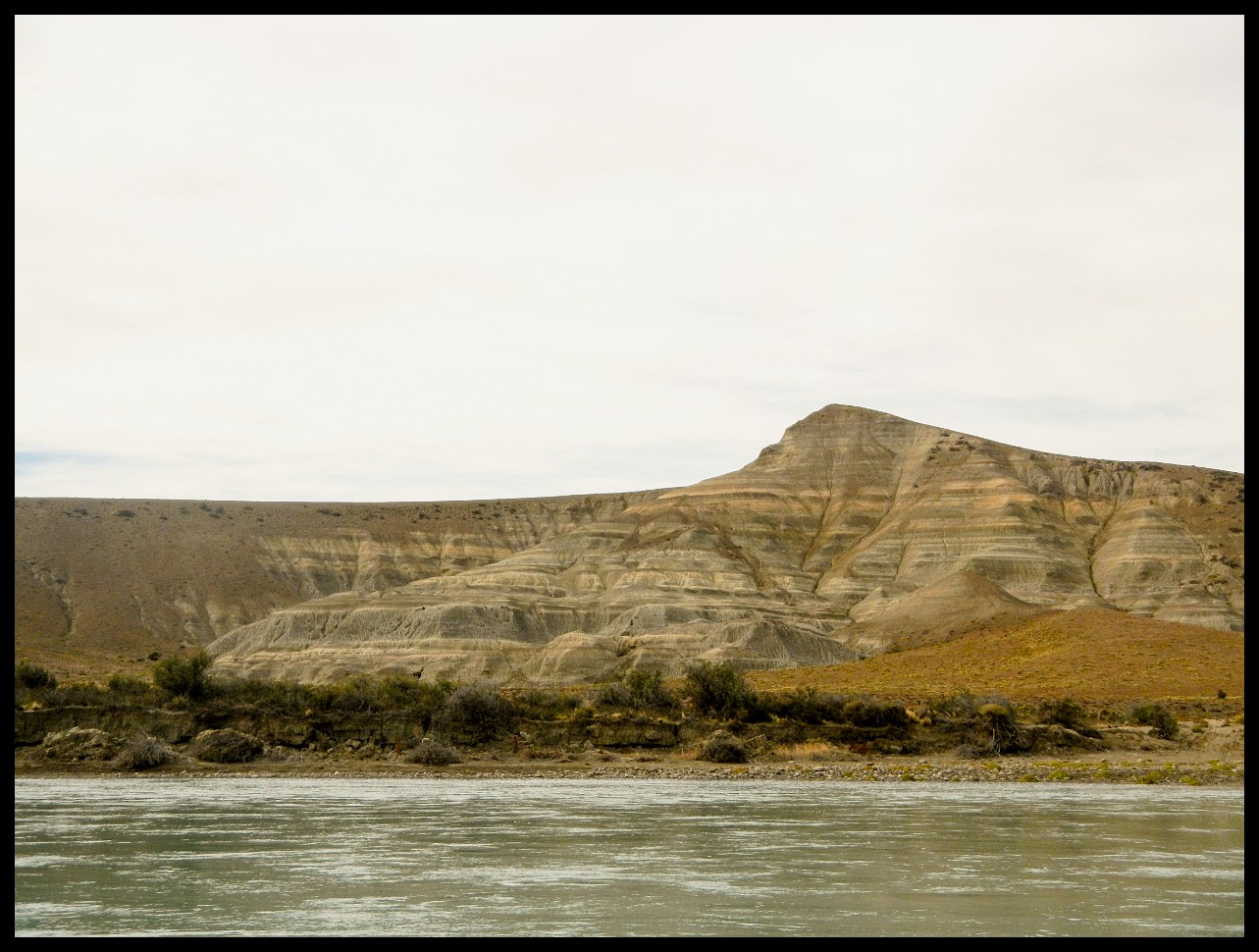
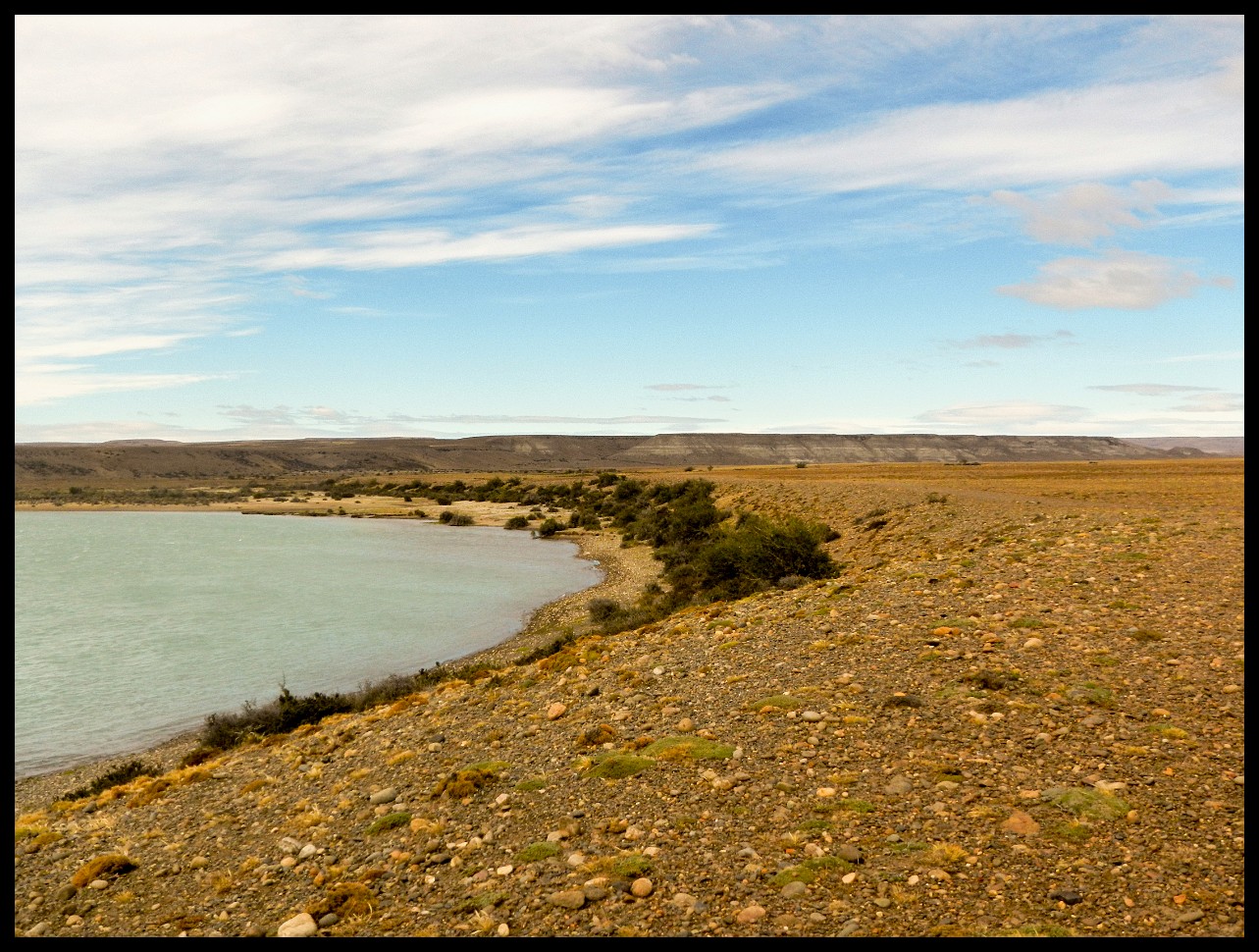
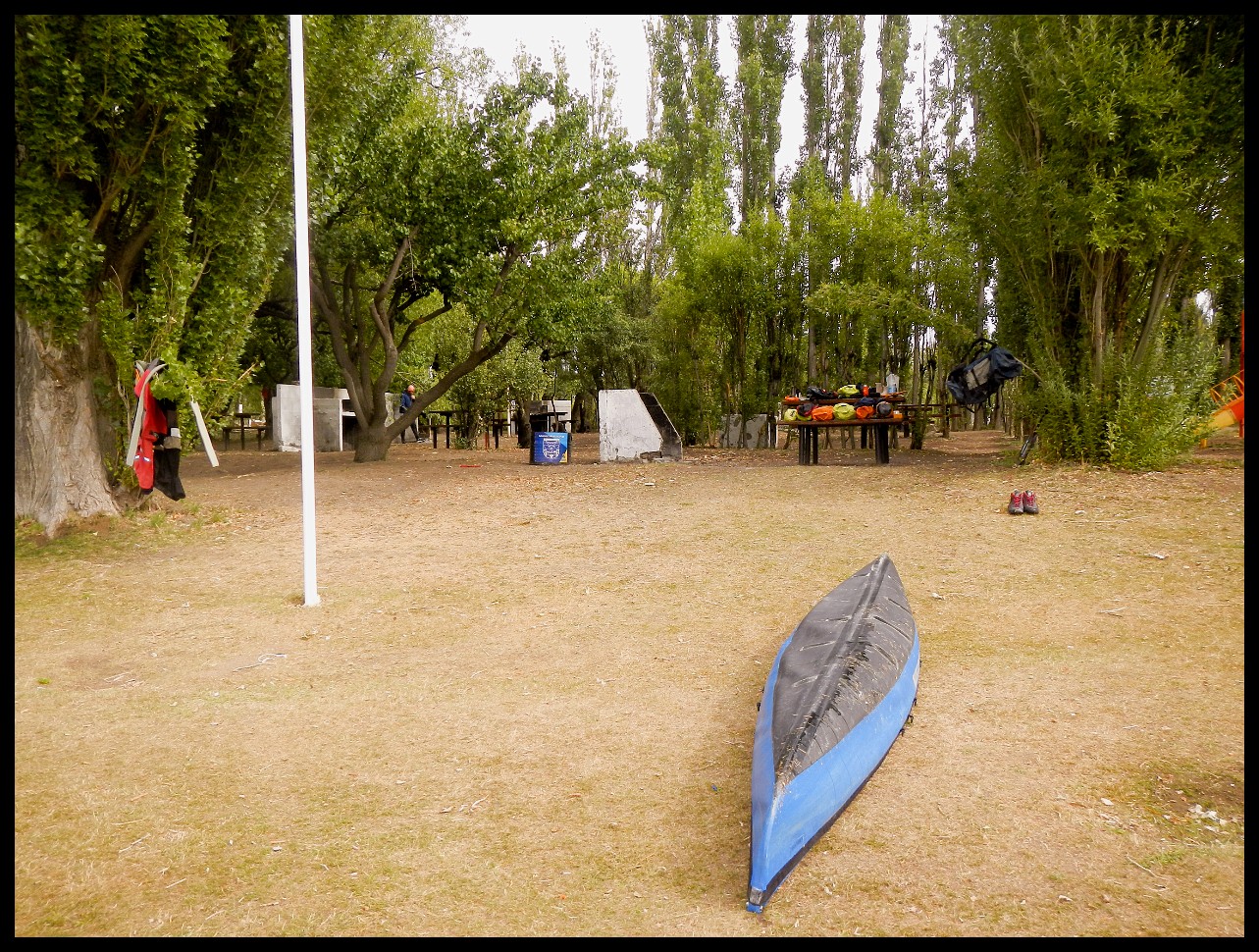
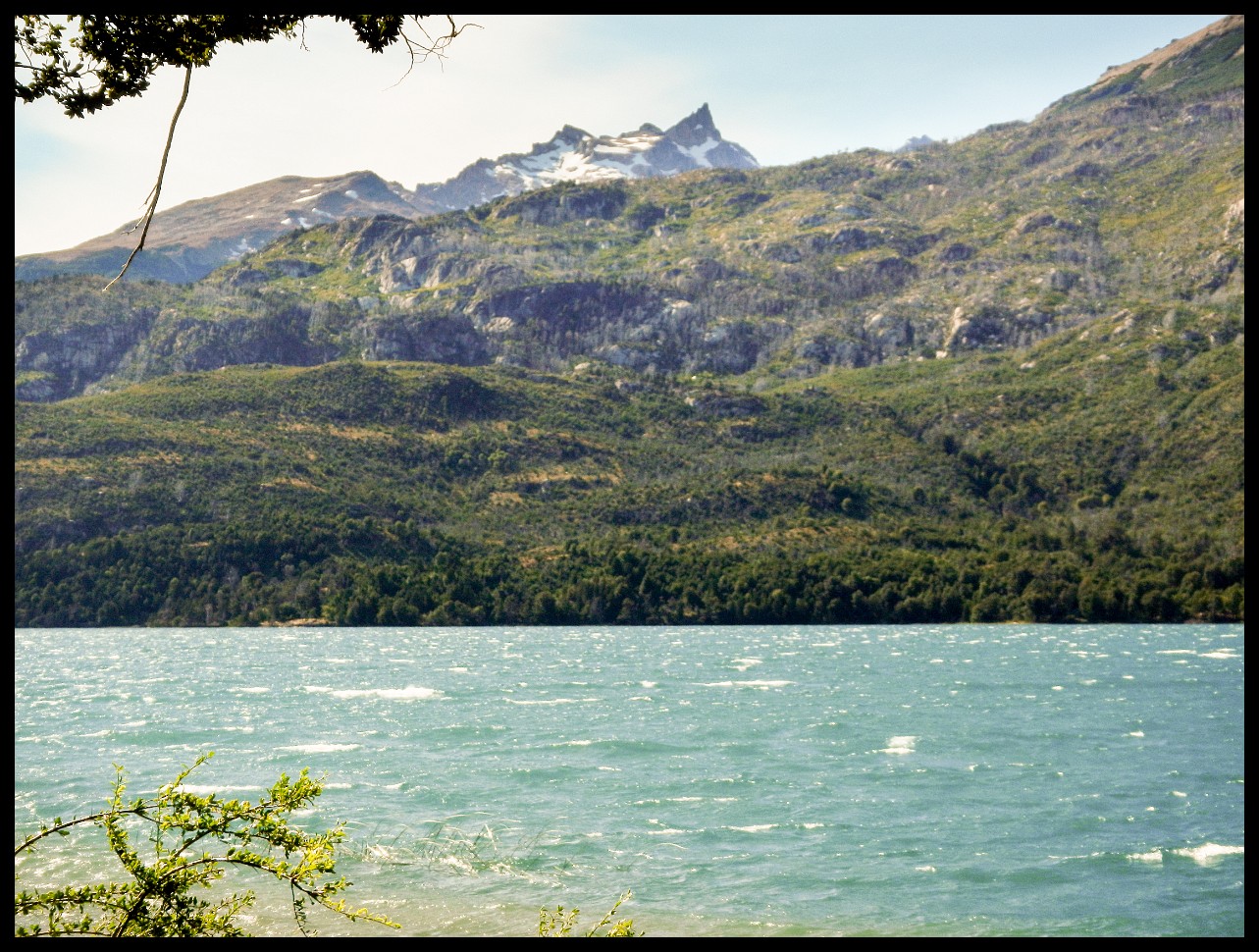
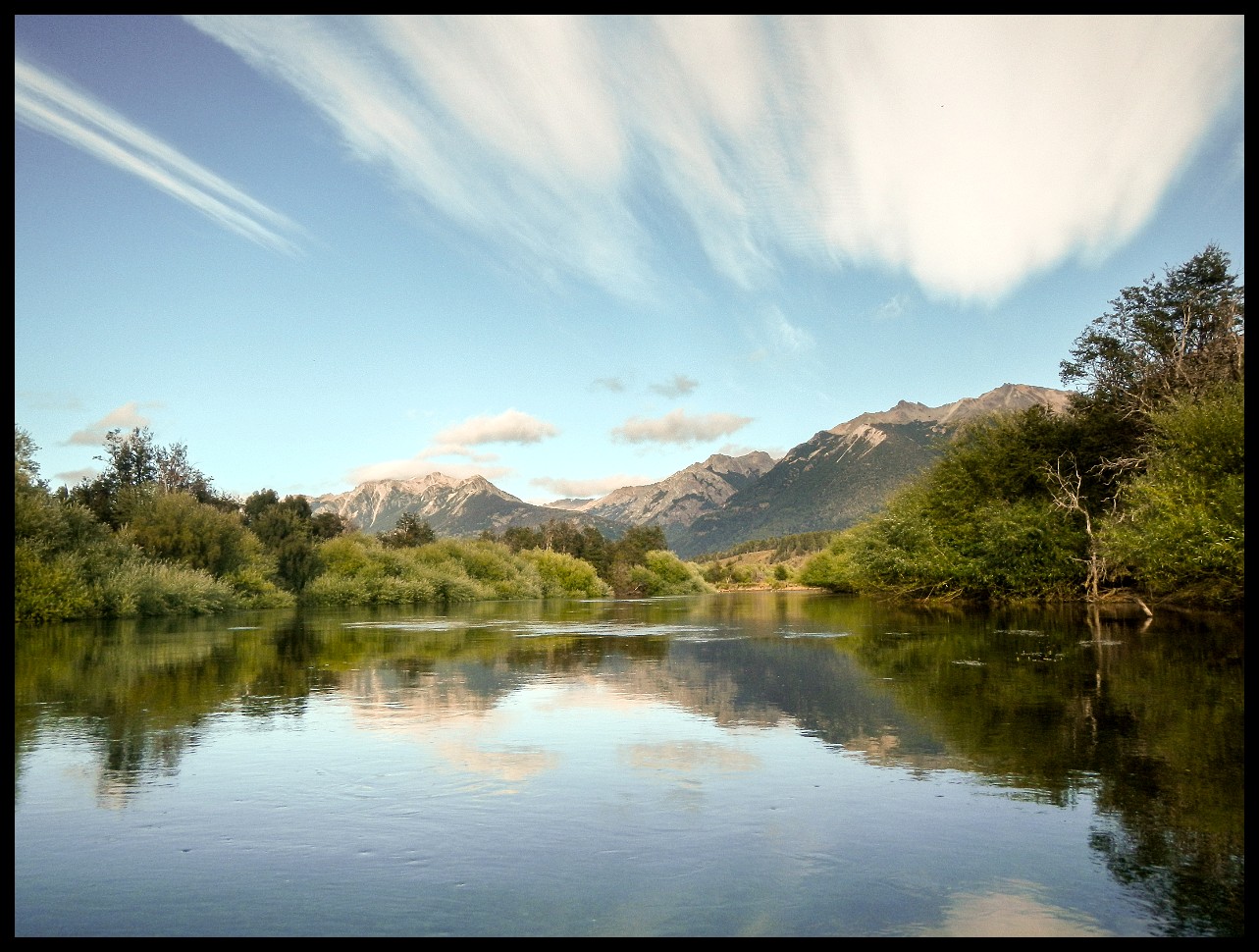
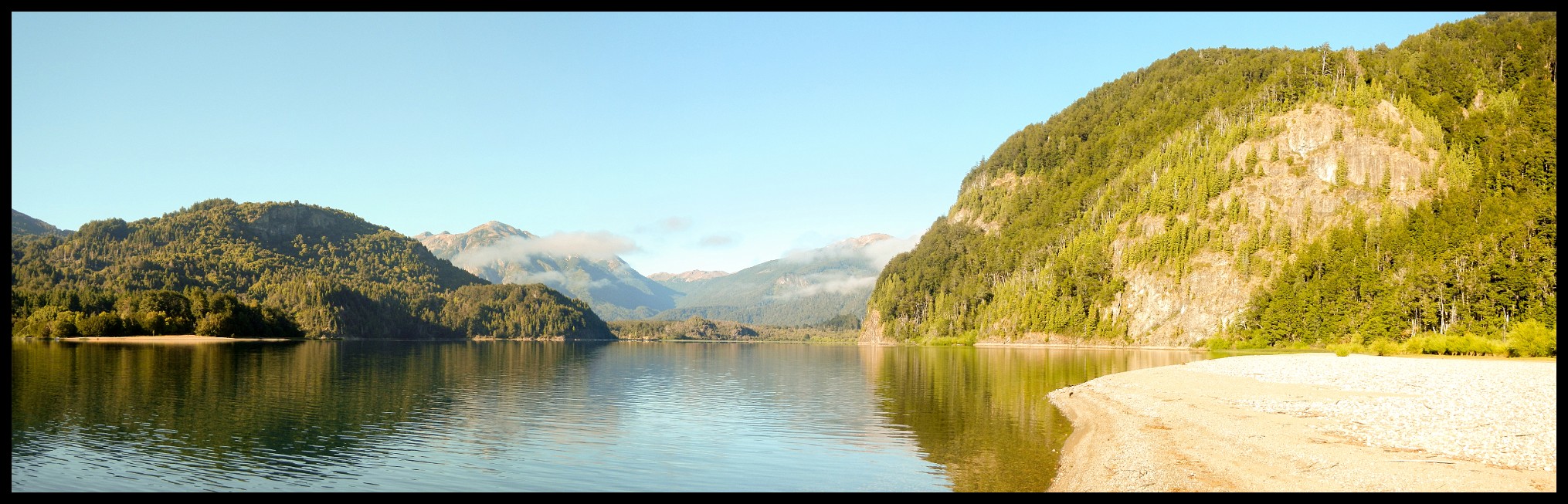
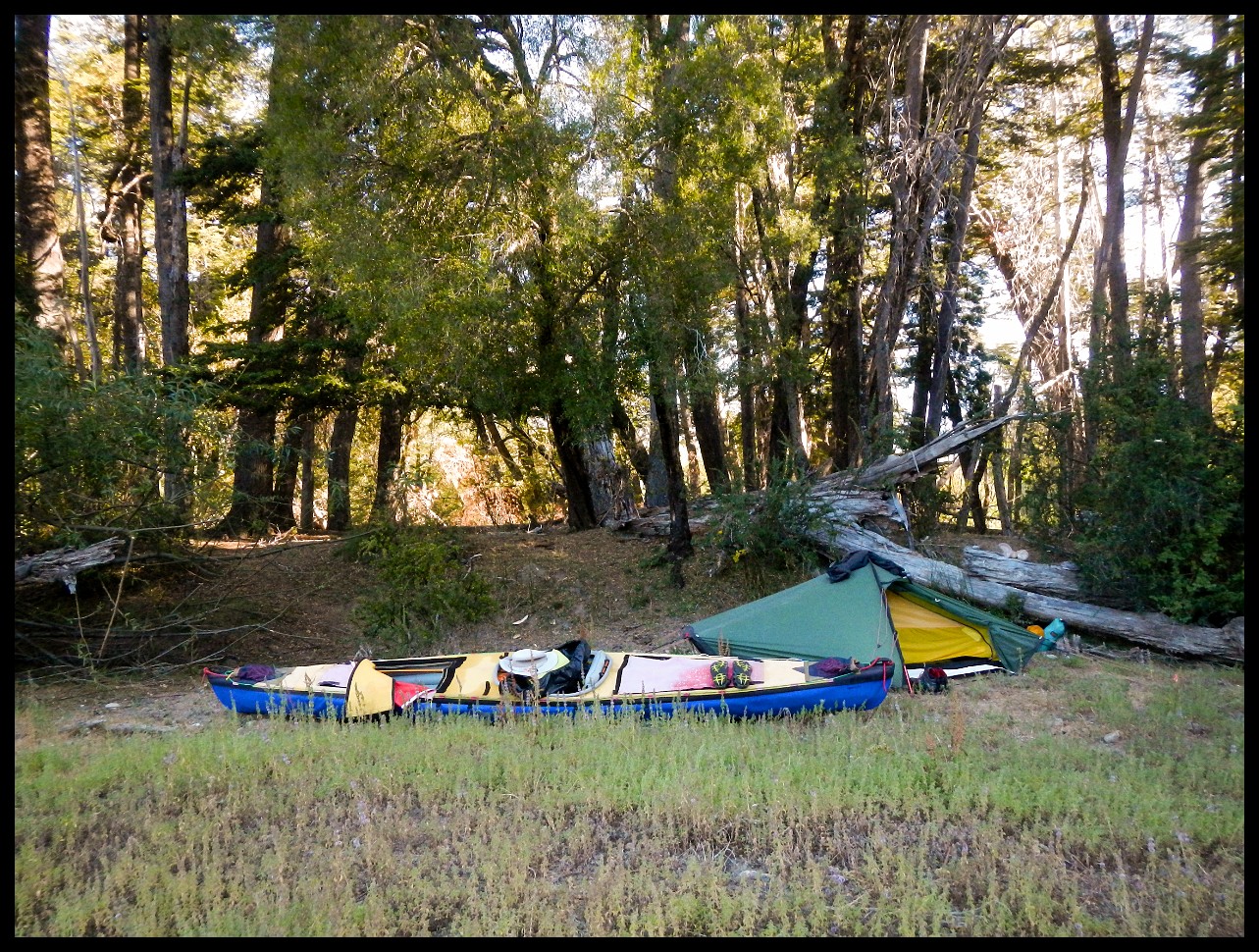
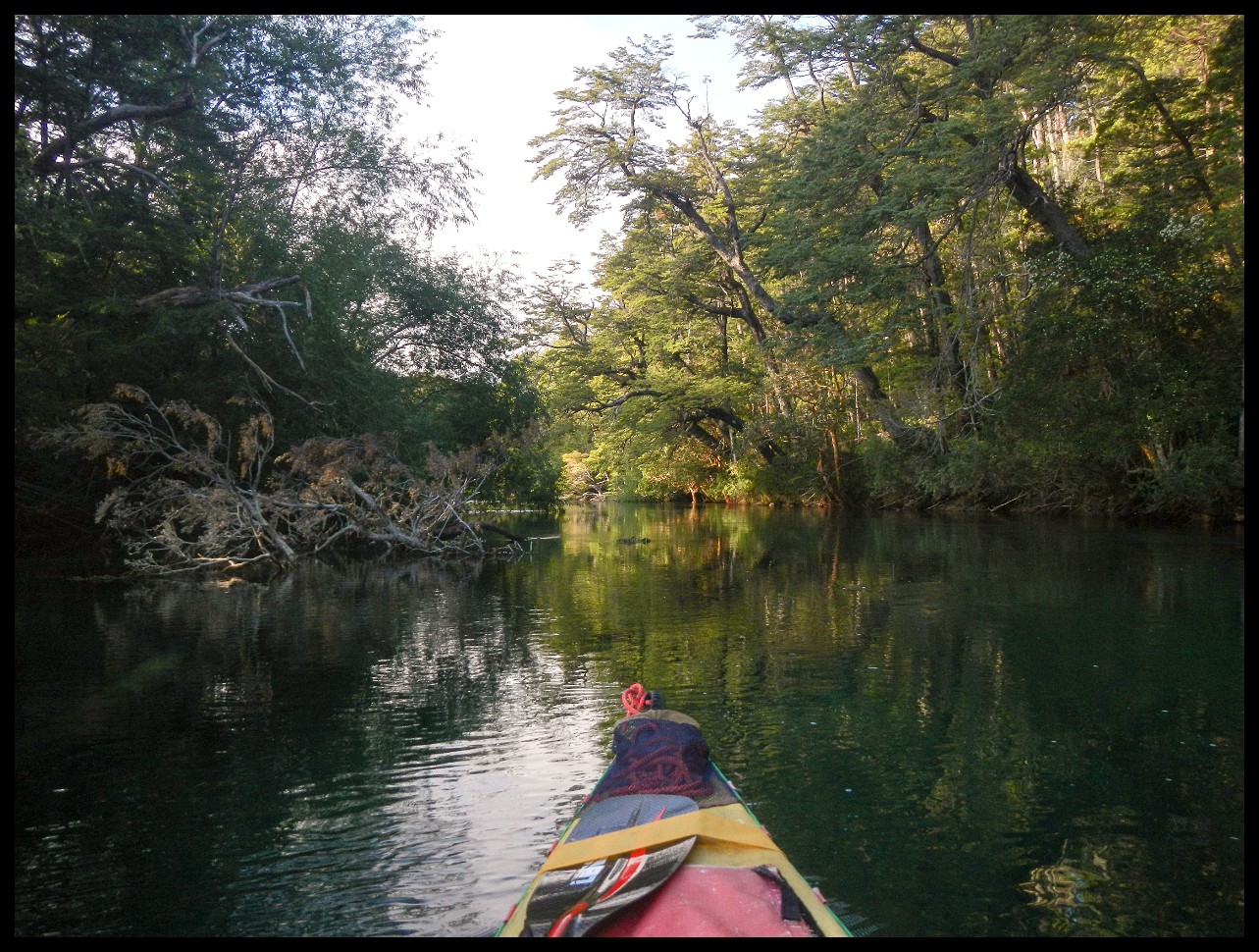
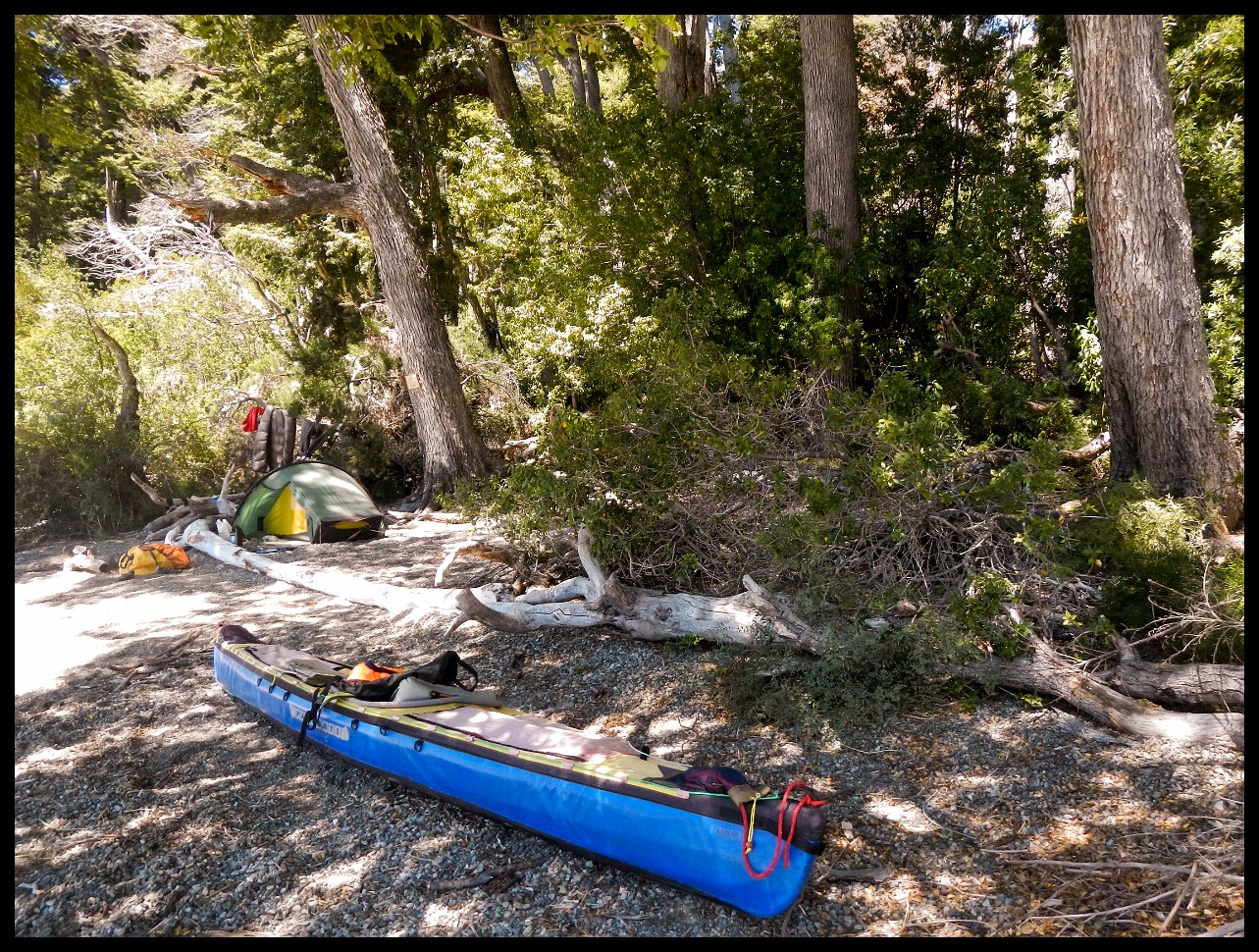
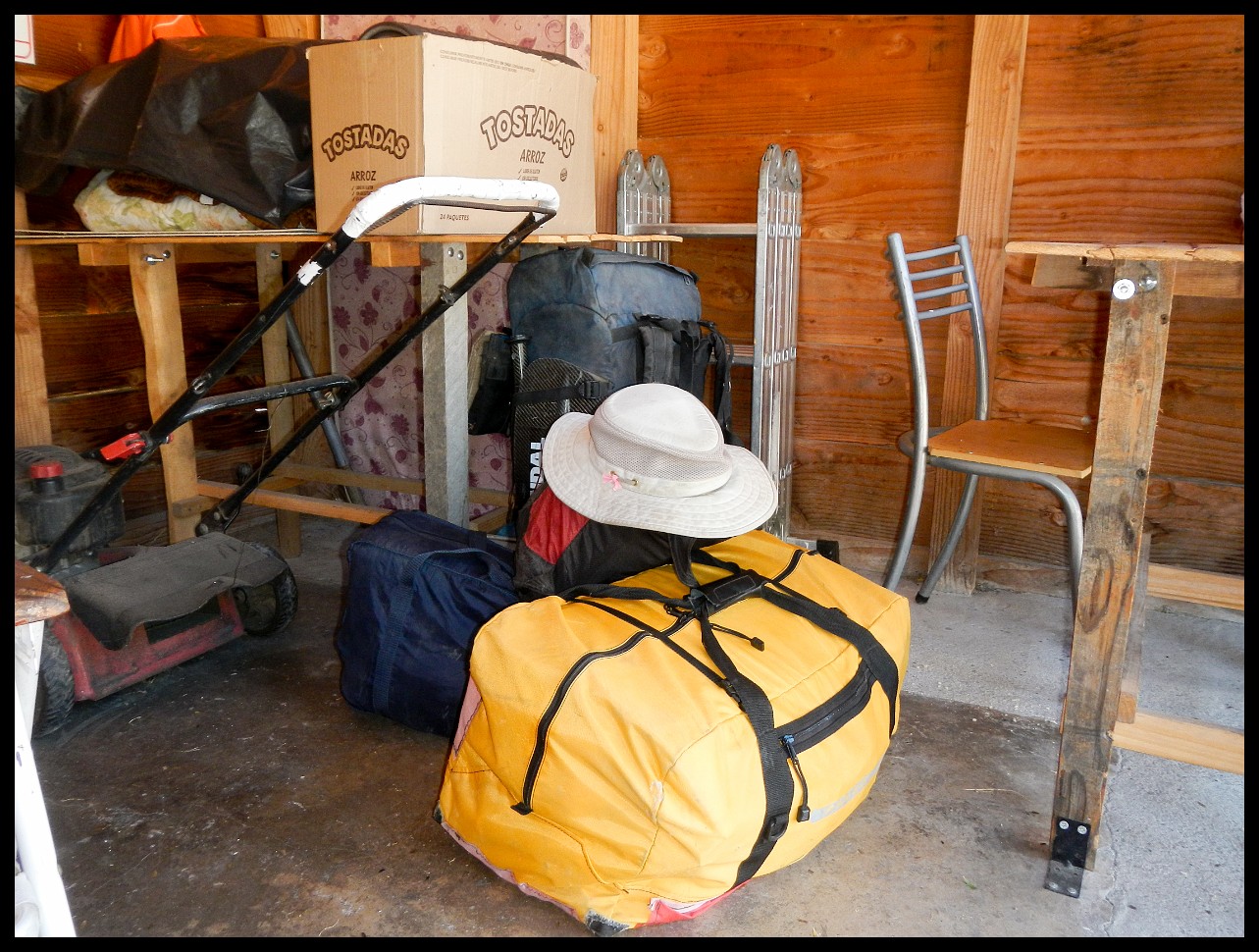
Rio Limay, meaning "clear water" in Mapuche, the language of Patagonia's indigenous people — the outflow of Lago Nahuel Huapi, "Lake of the Jaguar Island", just outside Bariloche. Folding kayak, camping gear, taxi drop-off.
And right away, from the start, broken equipment: important plastic connectors, poorly contructed by Pakboat. No such thing with the original, Ally. No plastic at important locations on an Ally frame.
And, as most of the time, a makeshift repair that will do for the moment.
The whole works. And without those DIY hatches, you'd be screwed packing and unpacking.
Food and WATER! The latter is clear but the river is lined with "civilization".
Clothes to be worn paddling, and the cooking utensils.
Ready to go.
First night.
A nice gentle river.
With a few issues finding a flat spot to set up camp.
The Limay has been turned into a series of reservoirs by hydroelectric dams.
Shade is of utmost importance. The sun is brutal and a real issue that should not be underestimated in its magnitude.
Again — hardly a spot to set up camp. This was one miniature island with exactly one spot that could fit my tent.
Sadly, pollution was no minor issue.
Rare shade, very rare. Me very happy!
The end of the test run, some 4 or 5 nights out, just before the first dam. The heat was overwhelming. Further on, there would not be a single tree for quite some time.
I was very lucky to get a ride back to Bariloche.
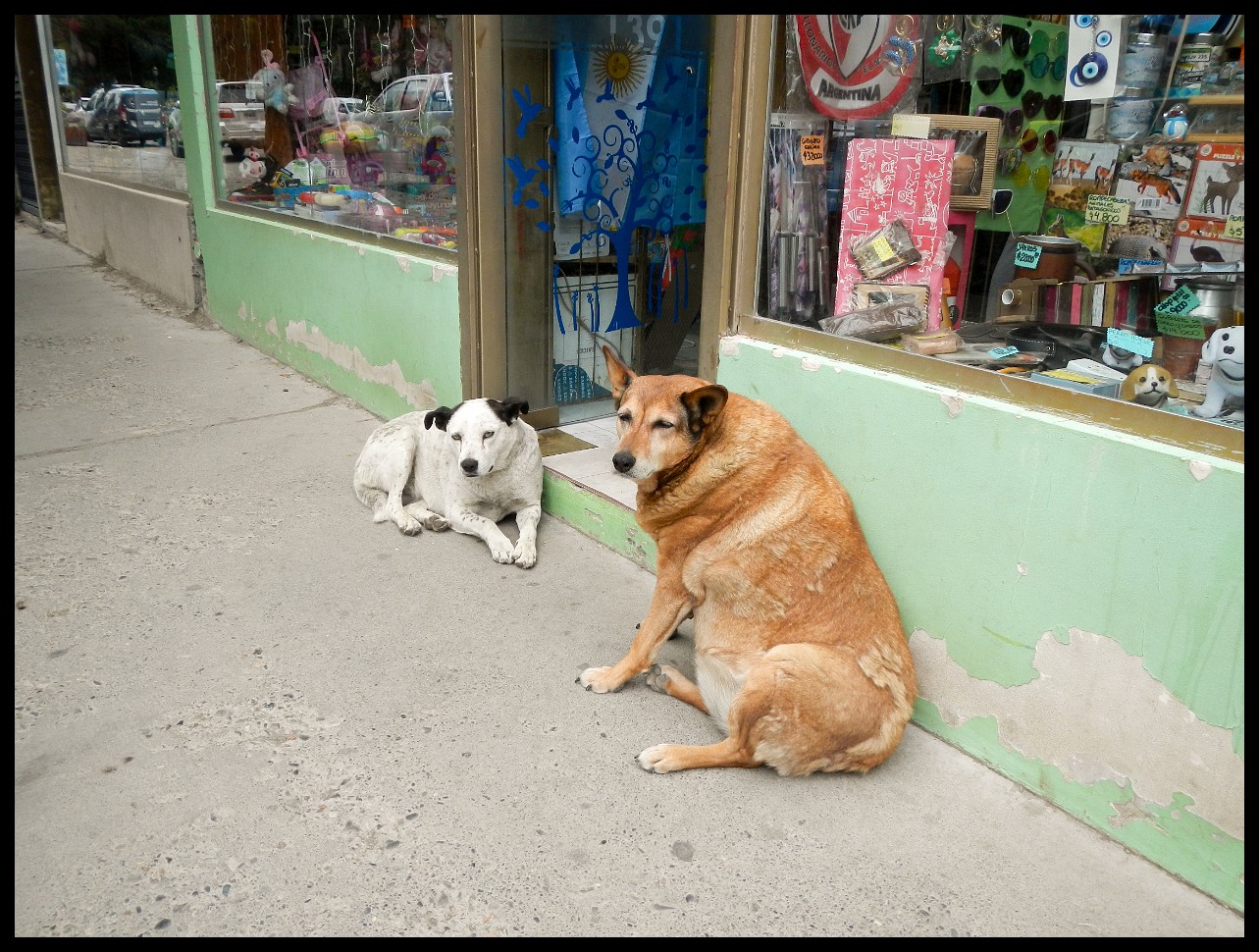
A bustling place — a major tourist hub, quite unlike the solitude of the river, but necessary.
Genuinely good artists, trying to eke out some money from motorists at traffic lights.
Argentinians are amicable people. Here, a finger painter displaying his work.
A legion of civil servants checking whether you paid your parking fee.
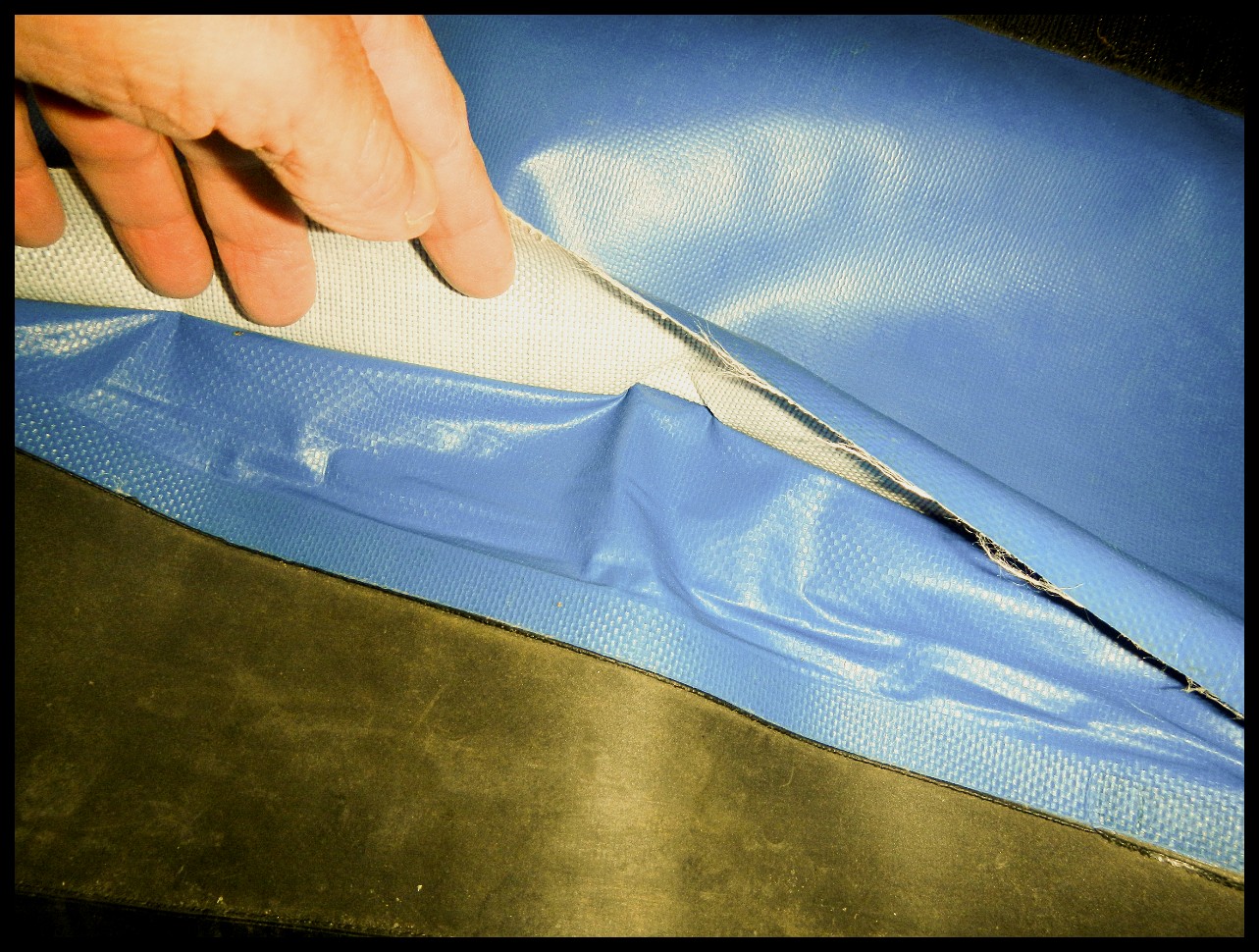
There is a major catch when your boat has inflatable tubes for maintaining the kayak's shape and rigidity. If left unattended in the sun, the expanding air will tear open the flimsy seam of the outer fabric — requiring a serious glue job.
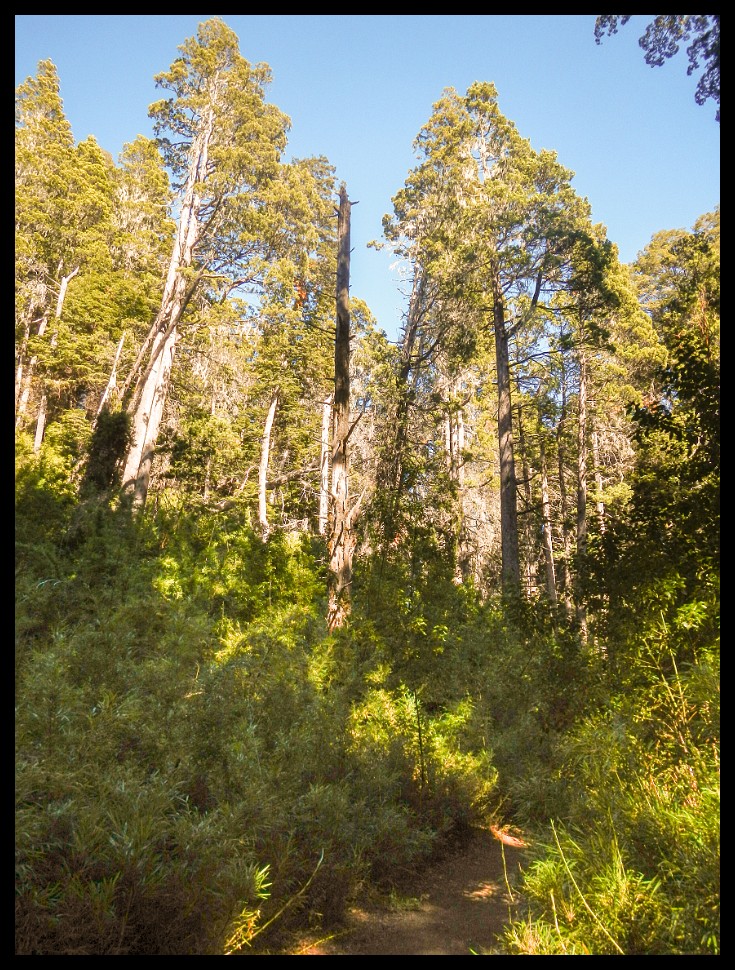
Hiking through the Llao Llao Peninsula.
The Andes are the western wall. Beyond them, Chile.
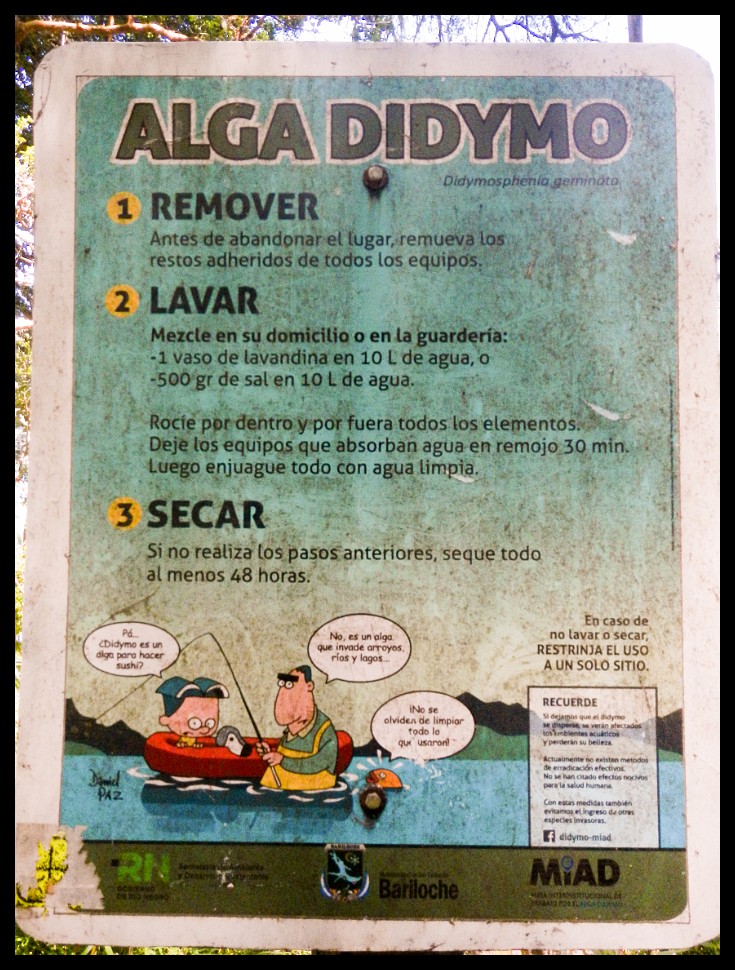
Didymo, an invasive alga that has been spreading through many rivers and lakes of Patagonia.
Still Llao Llao.
The arrayán trees, with their twisted trunks and smooth, cinnamon-coloured bark, are unlike anything I had seen before.
The heat was unbearable, and even more heat was to come further inland from Bariloche — away from the cooling Andes, down the Limay towards Neuquén. So I decided to fly south, to El Calafate, where it was cooler.
Lago Argentino.
And a first glimpse of Rio Santa Cruz. The one that should carry me to the Atlantic.
A touch of luxury.
Post-Milei prices: butter just under US$4. How the locals managed — no idea.
The inner workings of a taxi company.
A ridiculous entry fee to walk on the other side of this fence. I came to realize that Argentina in 2025 was among the most expensive countries to visit. Gone were the days when Argentina would support a traveller on a shoestring.
And — no surprise — everything here is built on a generous scale: wide roads, open skies, vast distances.
After stupidly asking the Prefectura Naval for their approval to float down the Río Santa Cruz, I went without their consent.
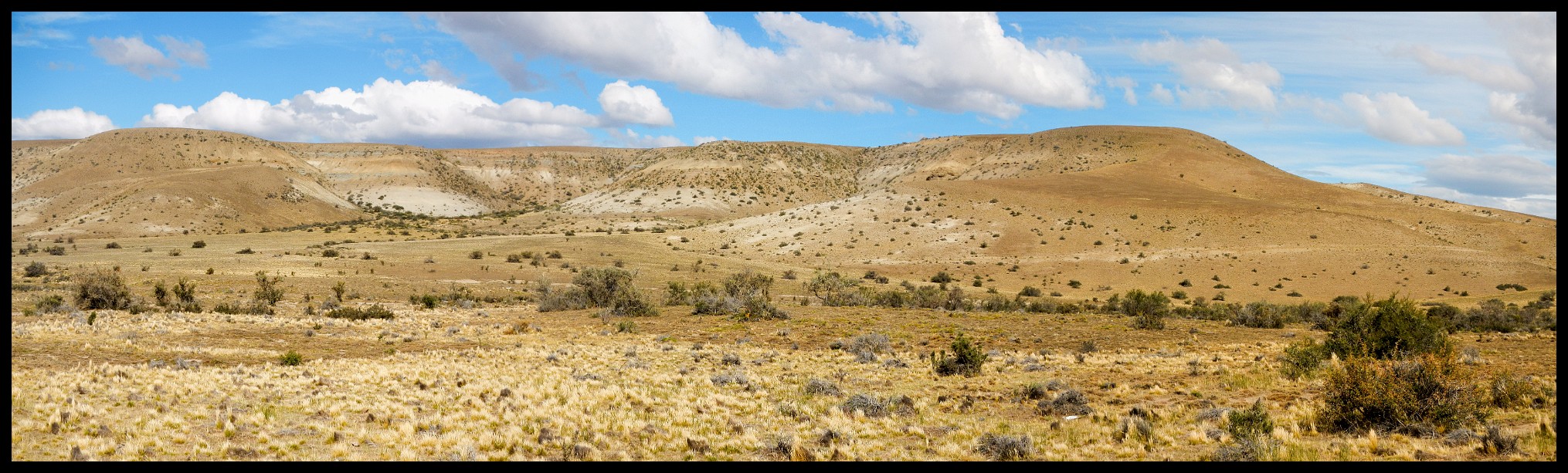
If you think the Canadian Barren Lands are barren — you ought to think again.
A former farm, or something of the sort — now deserted, like most places along the river these days.
The poplars mark every former settlement — windbreaks against the Patagonian wind, planted by European settlers and long outlasting them.
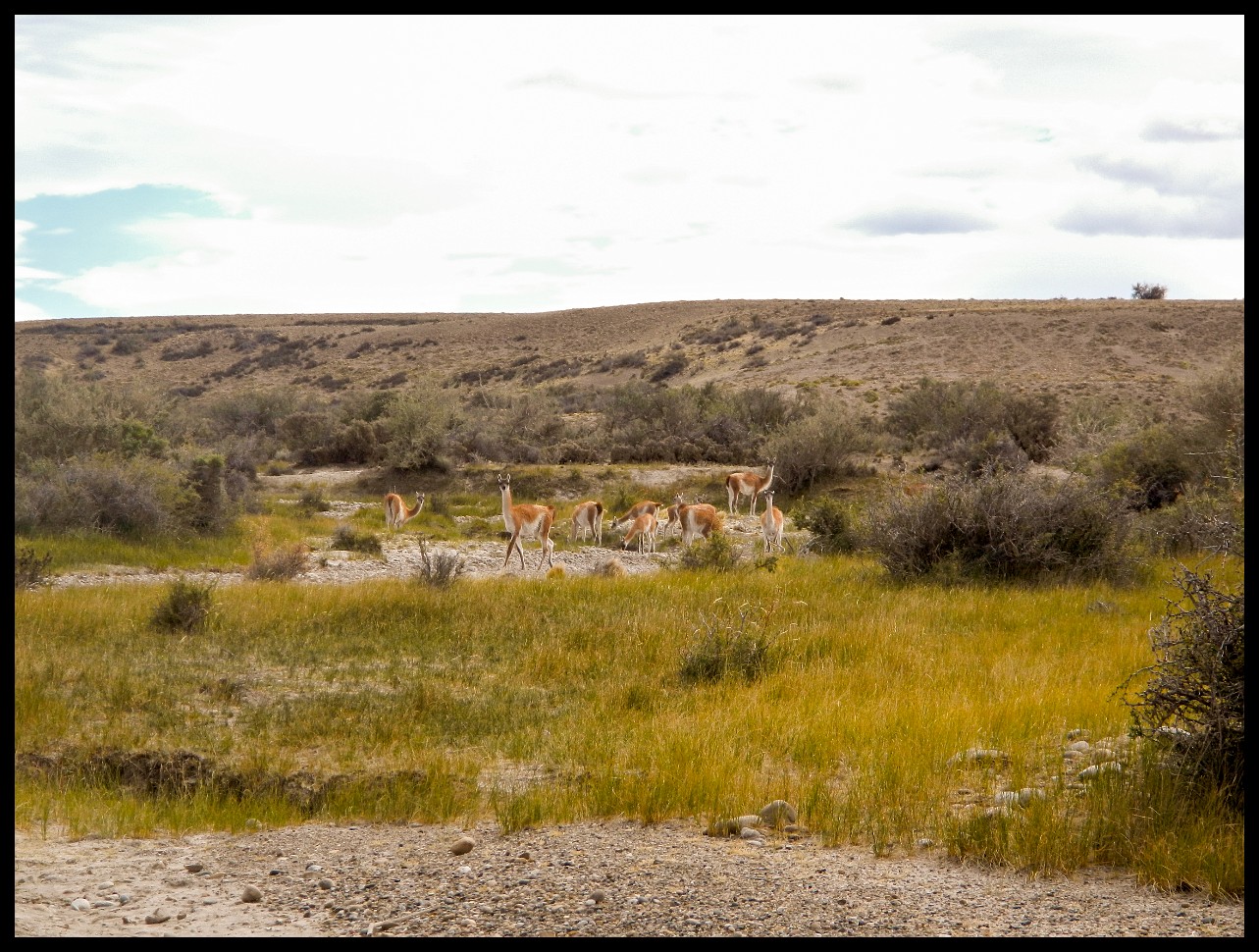
The Argentinian equivalent to the Canadian Caribou — perhaps, if that makes any sense — is the guanaco.
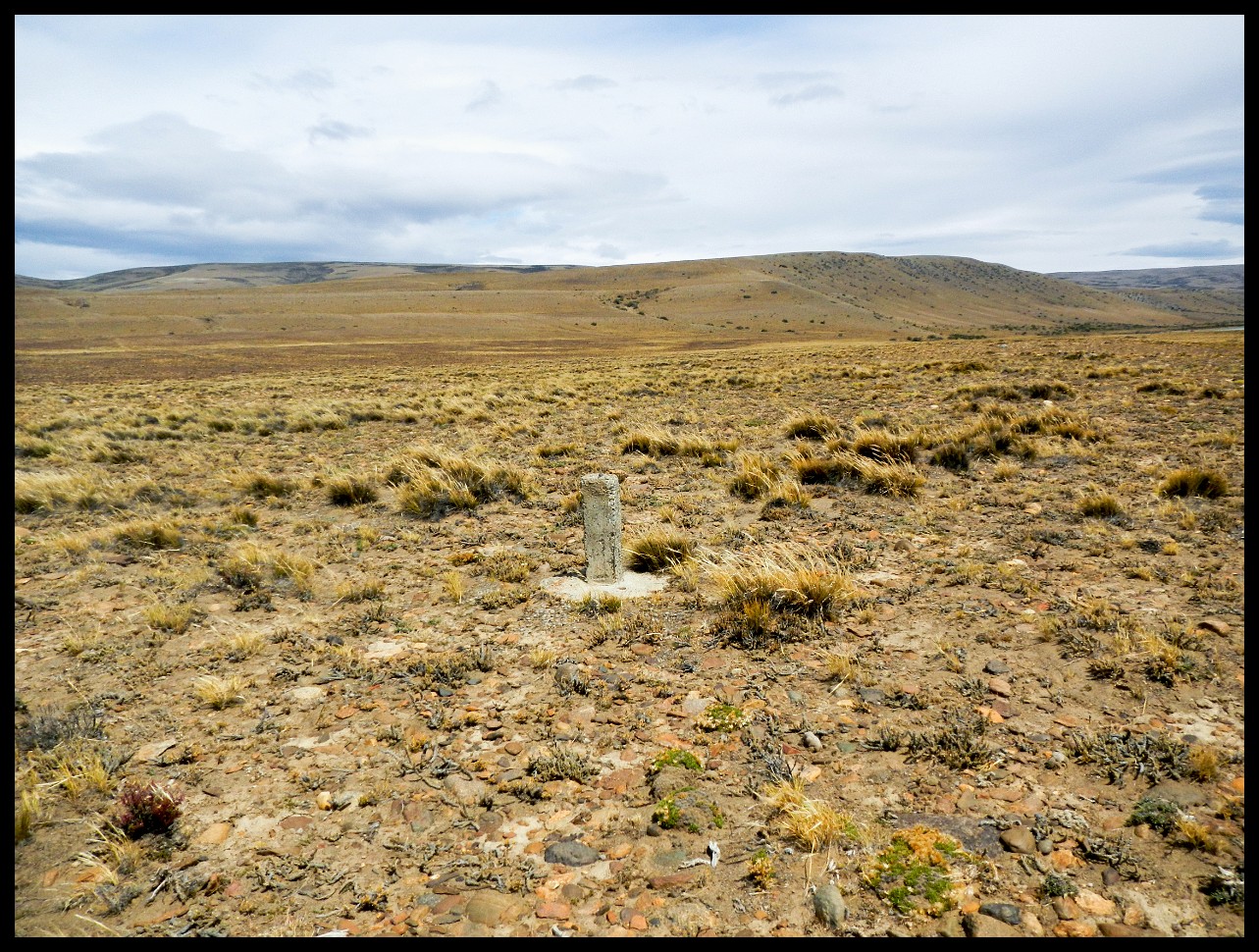
Why on earth would anyone bother to mark a spot in this forlorn landscape?
One utterly hostile landscape.
And yet again, in the middle of nowhere, someone staking a claim.
Wind-driven sand did for the zipper. I had to improvise.
Not a single living soul around.
Coming across a Darwin's rhea in the wild was a first for me — an extraordinary sight in an already extraordinary landscape. Darwin came this way too — in 1834, up the very same river.
Guanacos once again. Something of a miracle that they can survive in this parched landscape.
Not all of them successfully..
And a fence, stretching all the way to the horizon. Hard to fathom.
Patagonian waters are very cold. Doug Tompkins (The North Face founder) died because he wasn't wearing appropriate clothing.
The plants' defences against grazers are downright treacherous.
Horse poo. Wild horses, perhaps?
Someone's been sleeping here.
And someone's been roaming here.
A Liolaemus elongatus, perfectly camouflaged. Nearly stepped right on it.
And a funny, curious guy came by at supper time — a pichi, the world's southernmost armadillo.
The only one that hibernates.
Somewhat familiar from north of 60: barren horizon, endless sky.
A horse, fallen by the river. Not thirst, then — but Patagonia takes its toll regardless.
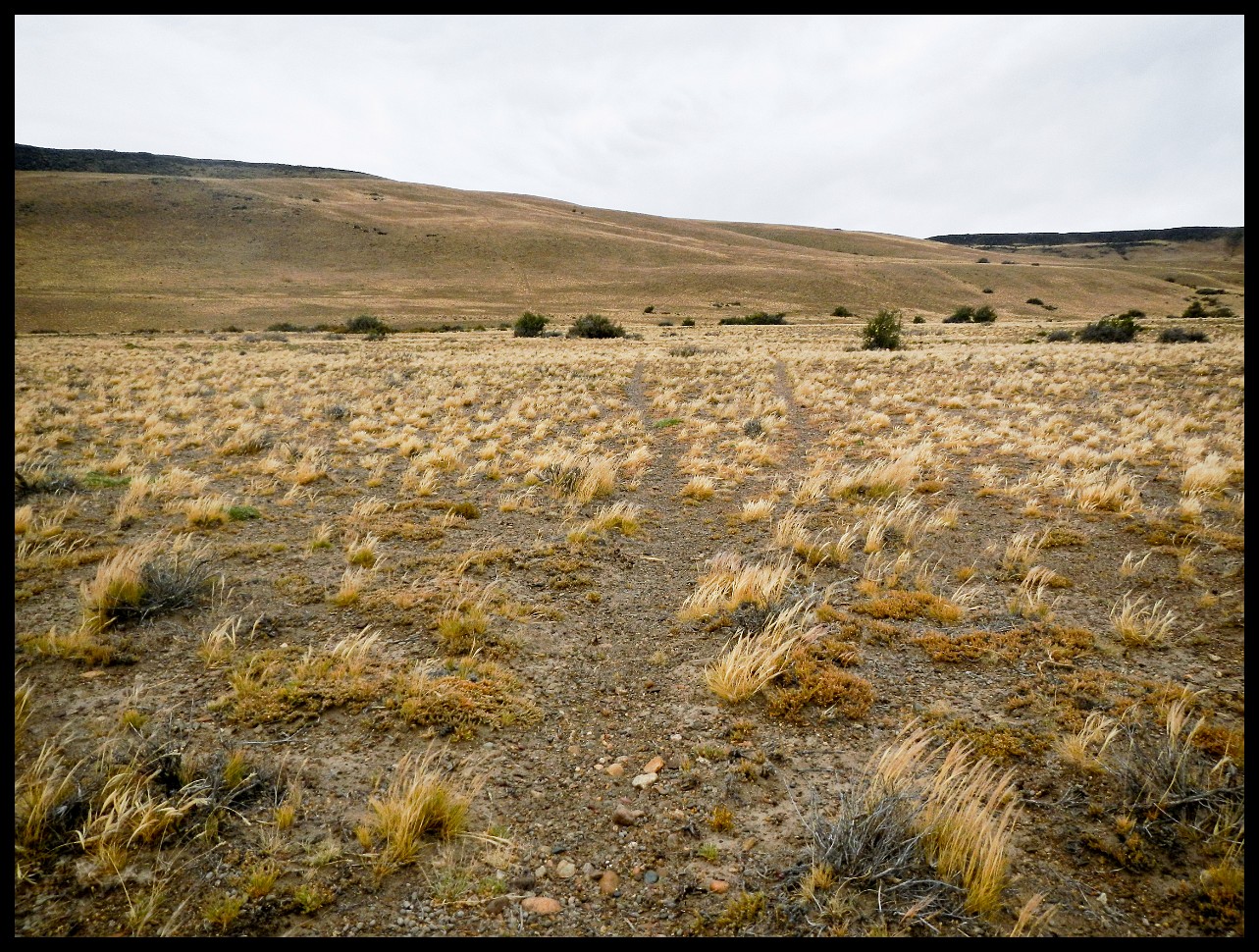
A somewhat decent dirt road.
Wind was, as expected, the issue, the challenge in Patagonia. Truth to be told — I believe Patagonia is nothing else but a Mapuche term for windswept land. Which, of course, is nonsense.
Magellan allegedly named the region after the Tehuelche people, calling them Patagones — "big feet" — for the enormous guanaco-skin shoes they wore.
Patagonian mud — sticking like crazy.
After some 10 days or so, the township of Comandante Luis Piedrabuena.
Camping Isla Pavón — civilisation, of a sort.
And all packed up nicely again for the cab to take me into town, to an ultra short-notice Airbnb host.
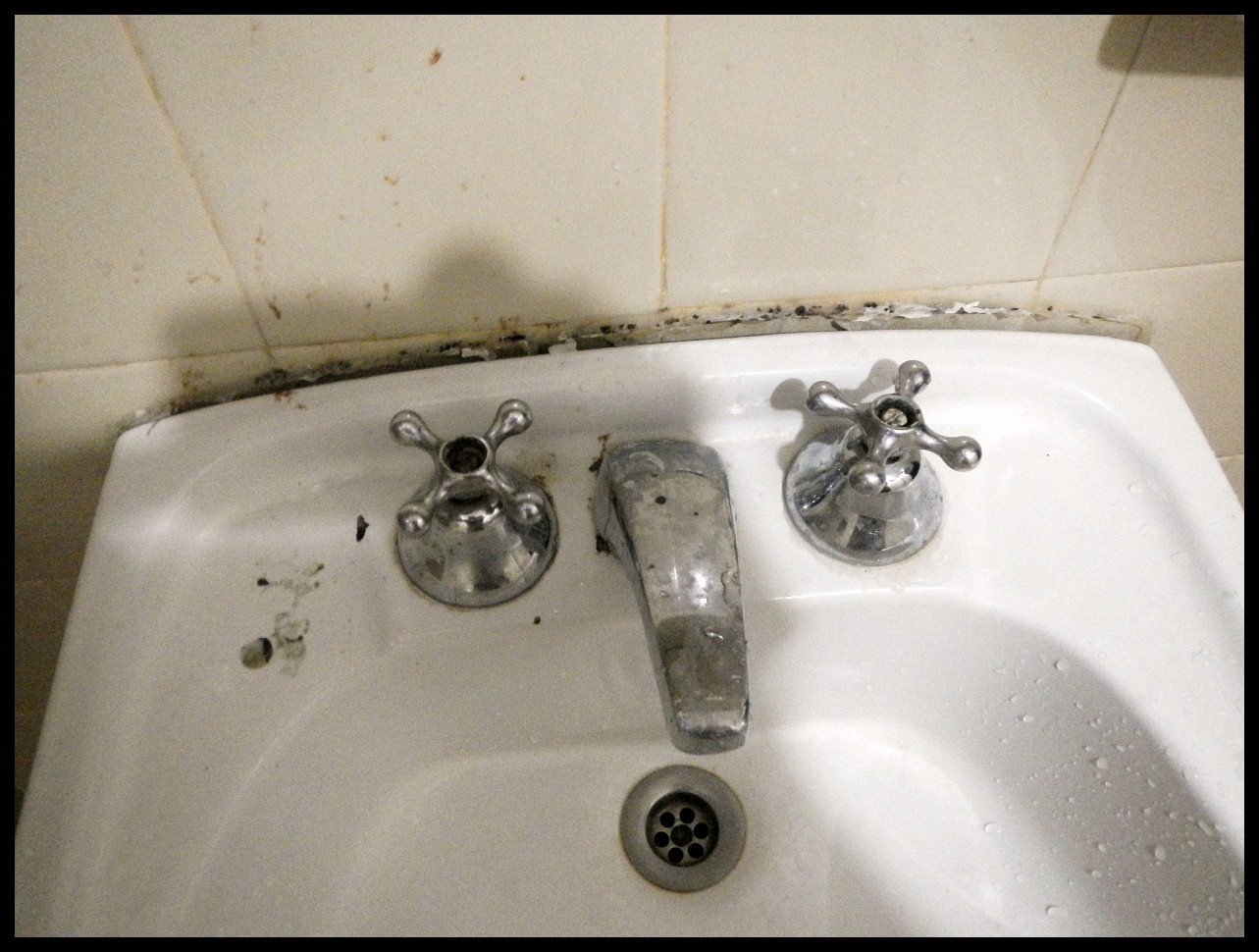
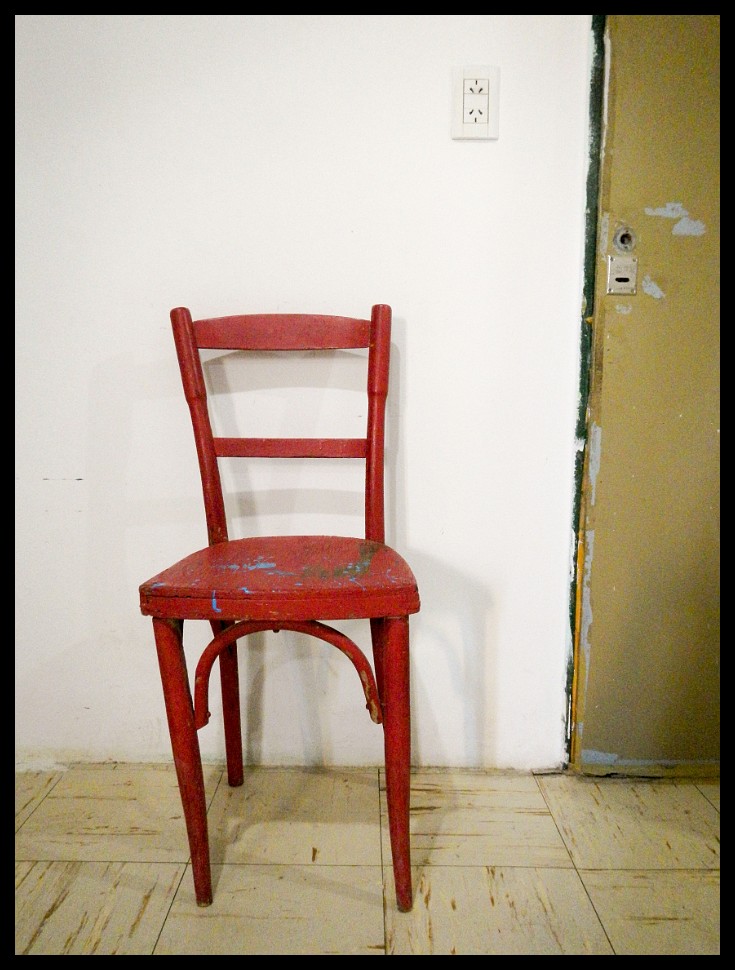
Which turned out to be very, very basic. Indeed.
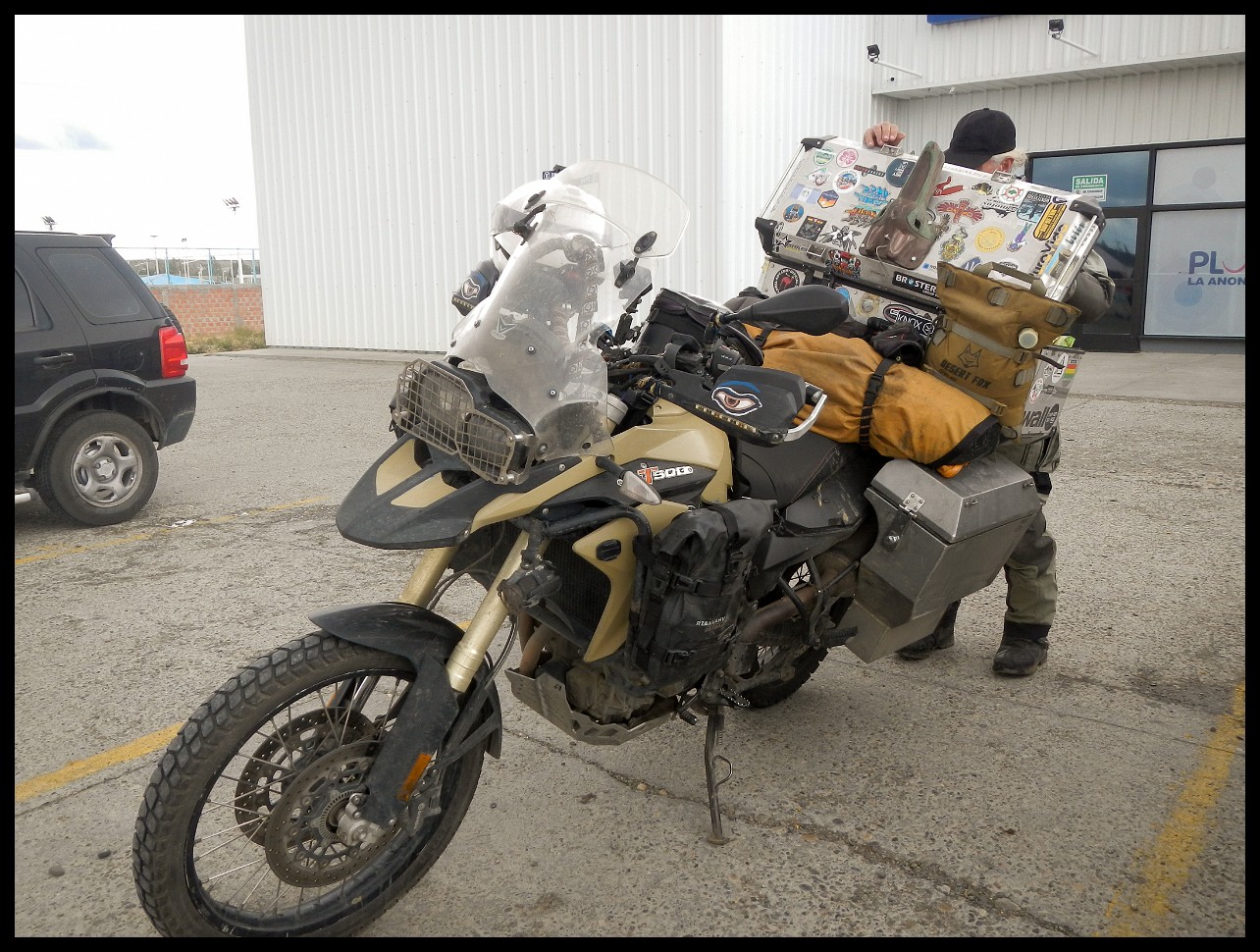
Krtw Rhyder (on Facebook). The kind of people you hardly meet at home. A well-retired Canadian bent on dying one day on his motorbike.
Touring Comandante Luis Piedrabuena.
A pretty stark contrast. Clearly, someone here takes pride in their patch.
At first glance, a mobile army recruitment office. On closer inspection — a travelling shop.
Piedrabuena's murals tell Patagonia's story—from Tehuelche creation myths to Argentina's darkest chapters. This panel: Kóoch, the lonely god bringing order to darkness; condor ruling the sky, puma the earth, fire the origin of life. (AI analysis; panel titles unconfirmed.)
The Patagonia Trágica — the sheep shearers' uprising of 1920–22, brutally suppressed by Colonel Varela's cavalry. Up to 1,500 workers were shot dead, many after surrendering.
Elal, hero god of the Tehuelche — a winged being who shaped the earth from chaos and breathed life into the first humans of Patagonia.
Earth, woman and sun — the feminine forces of Tehuelche cosmology that sustain all life in the Patagonian world.
The city's namesake: Luis Piedra Buena, Argentine sailor who settled on Isla Pavón in 1859 and forged a rare bond with the Tehuelche people at a time when others sought their destruction.
Turmoil and dispossession — the violent upheavals of early 20th-century Patagonia, when settlers, workers and indigenous peoples alike were caught in conflict.
Tehuelche faces, fragmented but unbroken — a people whose culture was shattered by colonisation, but never fully erased.
Size seems to matter — and this exhaust makes the point.
Inside the mechanics workshop.
The shop owner — with some German background.
Yet another serious relocation — from Piedrabuena to Esquel in one stretch. No small feat.
Through a landscape like this — for hours on end.
Patagonia doesn't do small.
The bus system is quite astounding. In a country this size, it might just be the glue that holds it all together.
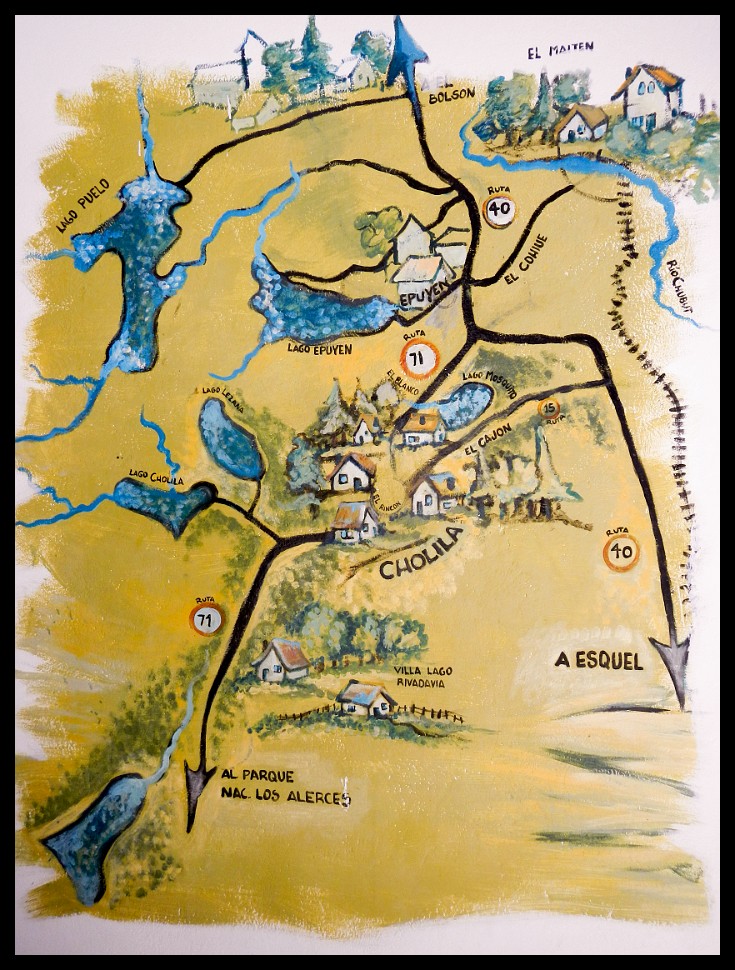
And after a rest and resupply in Esquel, onwards to Lago Cholila — to float down through Parque Nacional Los Alerces to Villa Futalaufquen.
Cholila may ring a bell to some of you.
Butch Cassidy and the Sundance Kid once called this region home.
Camping Abuelo Daniel — the last stop before Lago Cholila, if only I could figure out how to get there.
Rio Carrileufu. It's calling.
Cooking on an open fire — the Argentine way.
Jorge & Maria Laura gave me a free ride to Lago Cholila — rare generosity under Argentina's economic strain.
First night on the lake — once again, the vegetation leaving precious little space for a tent.
Still on Lago Cholila — at the far end, where the silence gets serious.
Second night on Cholila — generous space and shade. A luxury not to be taken for granted in this neck of the woods.
Last day on Cholila, and the lake had one final say — a dramatic wind churning up out of nowhere, almost capsizing me before the protected outlet into Rio Carrileufu came to the rescue.
Sound and safe at last, well protected from the wind. The river a very different world from the lake.
Easy drifting, no sweat.
The humpback pack was not the real McCoy. But neither is this a canoe — and somehow, it worked.
Guide needed — and no clue how that is supposed to work, leaving one wondering what dreaded obstacles might be in store.
Falling branches — who would have thought a warning sign was necessary? Apparently someone did.
I was very lucky — the notorious Patagonian wind spared me.
That strange tree again. Cinnamon bark, twisted soul.
A little detour into Lago Kruger. The Estrecho de los Monstruos. The Strait of Monsters.
Playas Blancas Lago Futalaufquen, motor boats out by nightfall, foot access only. And then the park warden appeared, as if out of nowhere, looking skeptical. Convincing him that I was, essentially, a waterwalker took some effort.
More warning signs: cold, deep lakes — as if the wind wasn't enough.
The final stretch ahead, around the corner to the right, in the calm of the late afternoon.
The early bird catches the worm and dodges the wind.
The final leg along an uninviting shoreline and the notorious wind picking up.
Final destination in sight. Wind still cooperative — for the moment.
Until it changed its mind. Man, was I happy to get off the water after riding some uncomfy waves into shore.
All packed up. Ready to rock and roll again.
By bus back to Esquel.
No pics from Río Alumíné or lower Río Limay: mugged in Buenos Aires, second-to-last day. After weeks in super-safe Argentina, the 16M city beast caught me off-guard. Minor losses, major lesson. My fault.